
Forward Movement
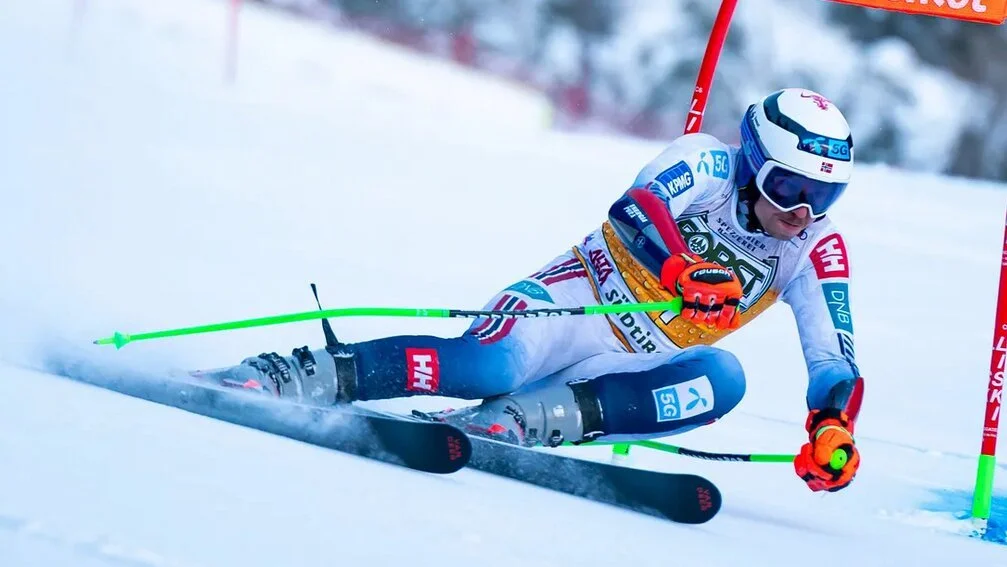
H. Kristoffersen/ Image by M. Pozza/Alamy
Overview
Movement 3: Move move your core and hips towards the snow beside your inside ski. Feel pressure increase against your outside ski.
This description is the third of eight modules included in the Ski Technique module, describing how elite skiers and racers carve turns.
Move forward to create more edge angle and greater pressure on the outside ski.
Start your forward movement as you start rolling your stacked outside leg toward the inside of the turn.
Watch Henrik Kristoffersen move forward rather than upward in the following video.
Video by Filip Chwistek
Coaches Tip: When and where to move forward
When skiing at a slower pace or making wide, arcing turns, stand on the outside ski, keeping your outside leg and core aligned or stacked. Your hips will be square over your skis.
As your speed increases and the turn becomes tighter, direct the centre of your core and hips towards the front of your inside ski.
To tighten the arc of your turn, direct your core and hips towards the snow beside your inside ski.
The faster you go and the tighter the turn, the more your core and hips should lean toward the inside of the turn.
The more you move toward the inside of the turn, the greater the pressure you should feel on your outside ski.
If you shift your core too far inside the turn, the pressure will transfer to your inside foot, reducing your ability to carve.
Maintain an Athletic Stance to prevent your upper body from hinging too far forward.
Henrik Kristoffersen demonstrates moving forward at the start of the turn in the following image.
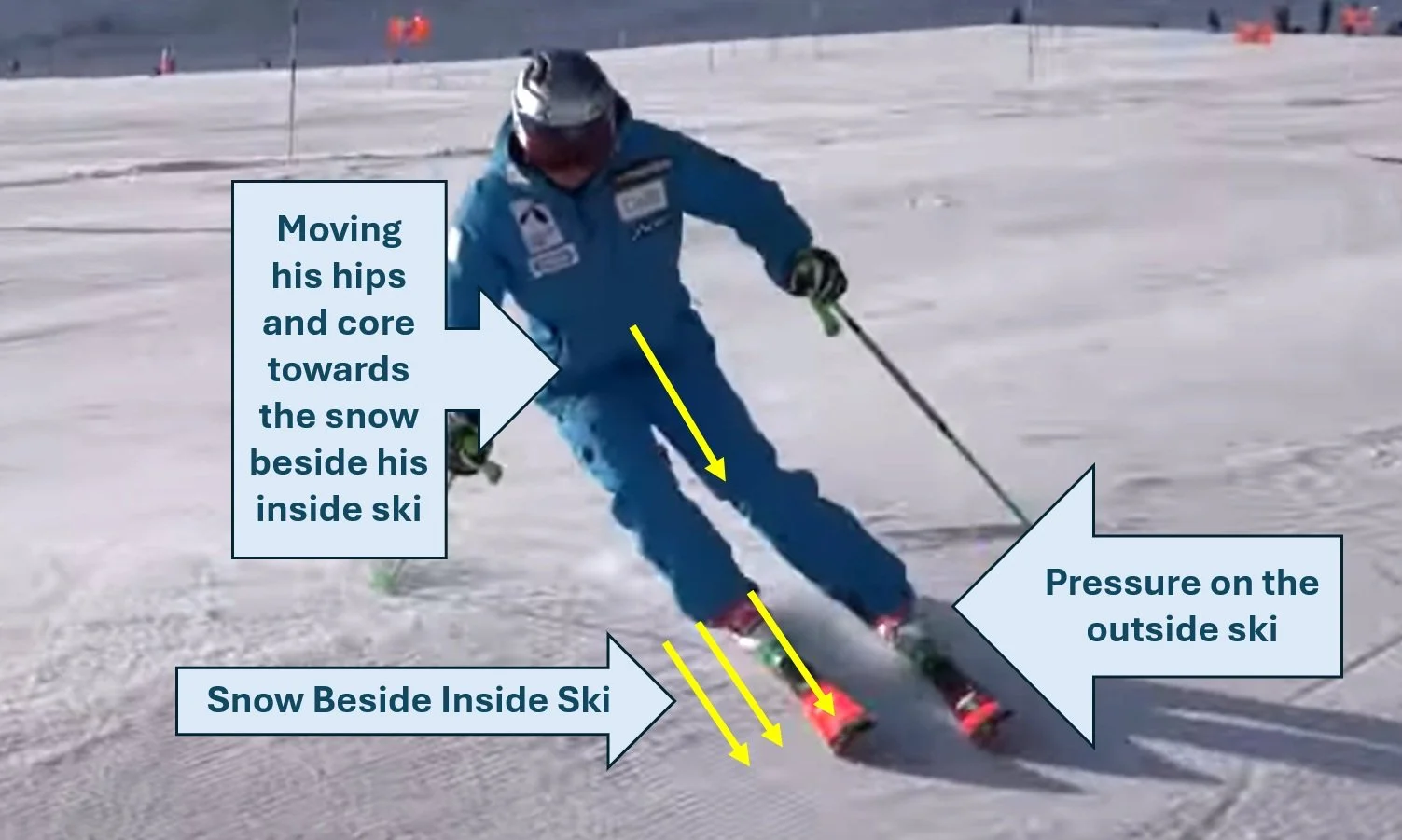
Image by Chwistek/Graphics by ARM
Your shoulders should normally be no more than just ahead of the binding of the outside ski at the apex of the turn.
Too much forward action with the arms will cause the pelvis to move backwards putting pressure on the tail of the skis.
Henrik Kristoffersen positions his shoulders ahead of his bindings in this picture.

H. Kristoffersen/ Image by M. Pozza/Alamy/Graphics by ARM
Watch about a MINUTE of this VIDEO for an analysis of the forward movement.
Video by Gilmore Gardens N.H.
The Forward Movement progresses until the body returns to the Athletic Stance ready to start the next turn.
Shortening the inside leg will also help you move forward, increase edge angle, and apply more pressure to the outside ski.
The physical movements for moving forward are shown in this image.
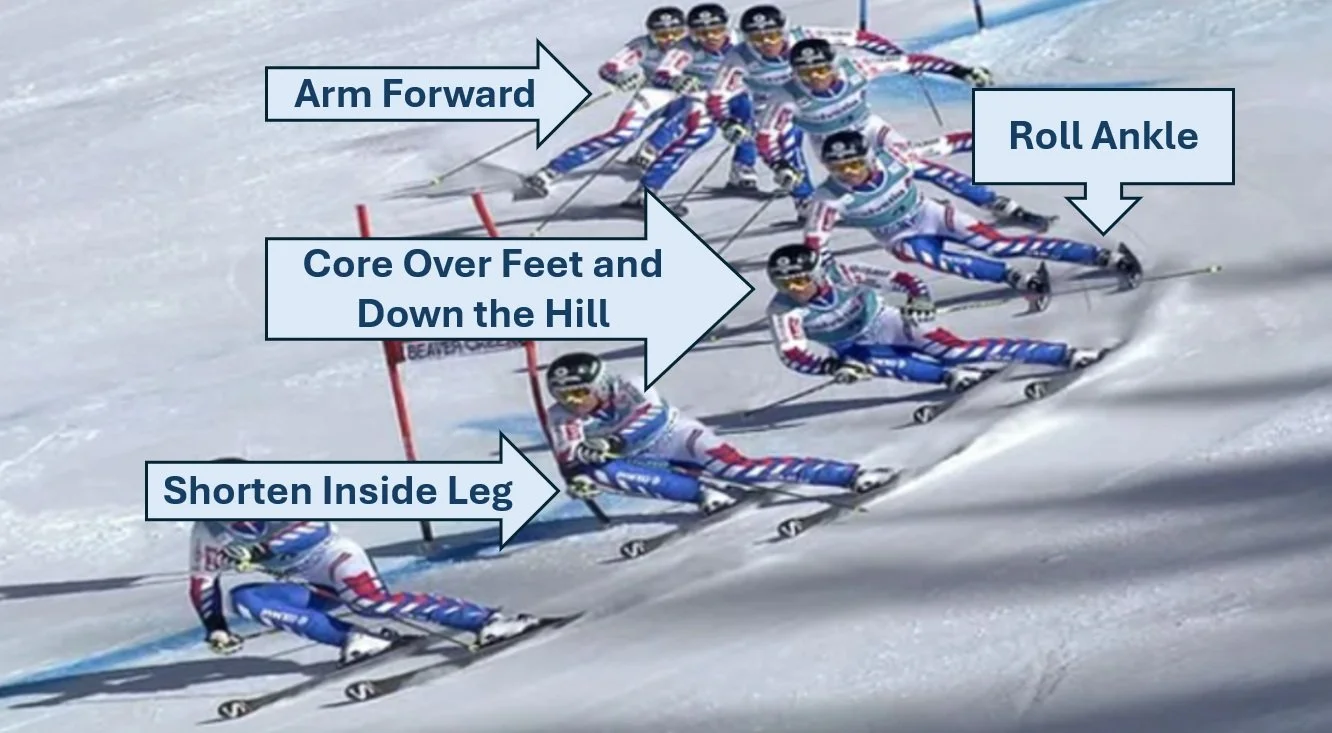
Image by Ron LeMaster/Graphics by ARM
The “Get Over It” drill helps develop forward movement.
Mikaela Shiffrin provides her commentary of this drill in this video.
Video by Burke Mountain Acadmey
Forward Movement for Slalom, Giant Slalom and Speed Disciplines
Slalom: In short radius turns the goal is to move your core down the fall line.
Giant Slalom: Your body should move towards the fall line and continue moving forward until the body faces the next turn.
Speed: The upper body tilts forward at the waist when using a high or low tuck stance.
Key Takeaways
Use your core muscles to move your chest and core forward over your feet and down the hill.
Forward movement increases the edge angle and pressure on the outside ski.
Avoid excessive forward arm movements, as they can push your pelvis backward. Aim to have your shoulders and head slightly ahead of the outside ski binding at the apex of the turn.
Suggested Learning Modules
Go to Ski Technique 4. Roll the Inside Leg
To gain a deeper understanding of the muscle groups comprising the human core, go to the Core module.
Return to Ski Technique or Reduce Risk of Injury
Important Message: Skiing and ski racing involve inherent risks. It’s essential to ski responsibly and stay within your skill level and personal comfort limits.